


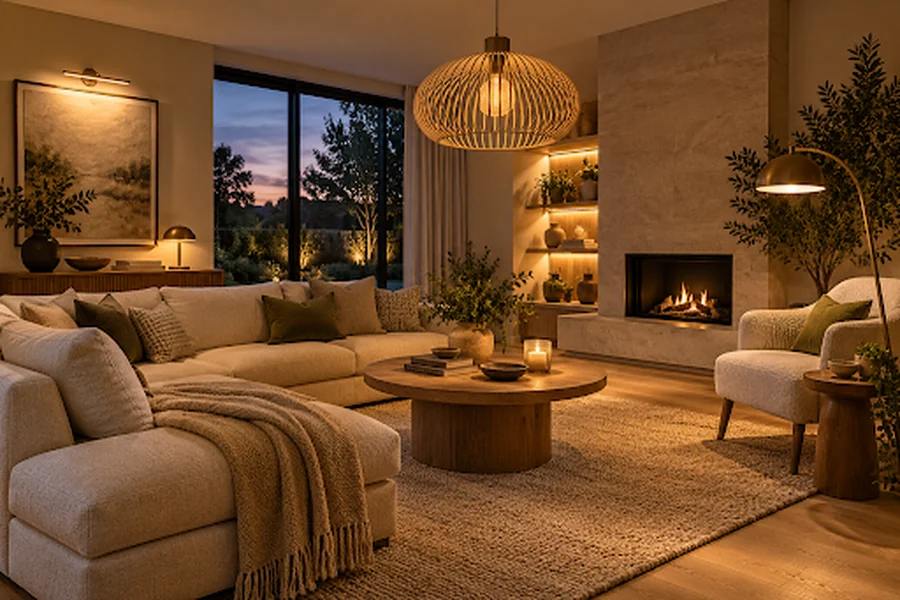
A living room rarely serves a single purpose. It can be a place to read, talk, watch television, welcome guests or simply unwind. A successful lighting scheme supports all of those activities without making the room feel overlit. Instead of relying on one powerful ceiling fitting, interior designers combine several sources at different heights to achieve balance, comfort and flexibility.
When evaluating pendants, wall lights and decorative lamps, exploring the range at lightingconcept.co.uk can help clarify which fixture styles suit your architecture and furniture. The important first step, however, is to decide what each light needs to do, then select a fitting with the right scale, distribution and control.
For a focused example of light positioned around a specific activity, the site also offers a guide to reading wall lights. Its discussion of adjustable, localised illumination is particularly relevant when a sofa or occasional chair doubles as a reading spot.
Start With the Room, Not the Fixture
Before choosing a lamp, note how the living room is used throughout the day. Identify the seating arrangement, circulation paths, bookshelves, artwork, screen position and the direction of natural light. A room with full-height glazing may need very little artificial light in the afternoon but several carefully distributed sources after sunset. A north-facing space may benefit from earlier use of warm ambient light.
Think in zones rather than treating the floor plan as one uniform rectangle. A conversation area benefits from gentle, face-friendly light, a reading chair needs a focused source, and a display shelf may call for a discreet accent. This exercise also reveals where sockets, switches and potential cable routes will influence the design.
Understand the Three Essential Layers of Light
Layered lighting is often described in terms of ambient, task and accent light. These categories overlap, but they are a practical way to make sure each fixture has a clear purpose. A well-designed room usually uses all three without requiring every light to be switched on at once.
Ambient Light: A Comfortable Foundation
Ambient lighting makes the room easy to navigate and provides an overall sense of brightness. It may come from a shaded pendant, discreet ceiling fittings, uplighting or a combination of wall lights. The goal is not to flood every corner equally. A little variation between brighter and quieter areas creates depth and makes the space feel residential rather than clinical.
Task Light: Brightness Where It Matters
Task light should serve the activity and the person using it. A directional floor lamp beside a reading chair, for example, can illuminate pages without disturbing someone watching a film nearby. Position the beam to limit reflections on glossy surfaces and avoid shining directly into the user’s eyes. Adjustable arms or heads are especially useful when seating positions change.
Accent Light: Shape and Visual Interest
Accent lighting draws attention to a picture, textured wall, plant or piece of joinery. A narrow beam can establish a focal point, while concealed shelf lighting produces a subtle glow. Restraint matters: highlighting every decorative object dilutes the effect and can create distracting patches of brightness.
Plan the Lighting Around Sightlines and Furniture
The best position for a fitting is not always the geometric centre of the ceiling. In a living room arranged around a sofa and coffee table, a pendant may make sense above the seating group, provided its height does not obstruct views across the space. In a compact room with low ceilings, a ceiling-hugging fixture or wall-mounted alternatives may preserve a greater feeling of openness.
Consider what people see when seated. Exposed bulbs, bright LED points and poorly shielded downlights can create discomfort even if the measured brightness seems reasonable. Look for diffusers, shades and beam angles that conceal the light source from common viewing positions. For television areas, avoid placing strong luminaires directly opposite the screen where reflections are likely.
Choose Fixtures That Give the Room Character
Pendants and Ceiling Lights
A pendant can work as a sculptural centrepiece as well as a source of illumination. Its diameter, material and suspension length should relate to the scale of the furniture beneath it. Open shades and clear glass can look visually light, but the bulb remains more visible. Opal glass and fabric shades generally offer a softer apparent source, making them useful when visual comfort is a priority.
Wall Lights, Table Lamps and Floor Lamps
Wall lights are valuable where floor space is limited. They can frame a chimney breast, support an evening mood or provide reading light beside seating. Table lamps place the glow nearer to eye level and introduce intimate pools of light, while floor lamps can help define a corner without additional electrical work. Combining these formats brings variety to the room’s silhouette and avoids a ceiling-heavy scheme.
Materials affect the appearance of both the fitting and the light it casts. Brushed metal adds definition, ceramic feels tactile, timber introduces warmth, and translucent glass diffuses illumination. Select finishes that connect with the room’s existing details rather than matching every fixture exactly. A coherent palette usually feels more considered than a complete set of identical lamps.
Get Colour Temperature, Brightness and Glare Right
Light output and colour temperature are different decisions. Lumens indicate how much light a source emits, while Kelvin describes whether white light appears warmer or cooler. For many living rooms, warm-white lamps around 2700 K to 3000 K create a relaxed atmosphere, although the best choice depends on daylight, materials and personal preference. Avoid mixing markedly different white tones within the same intimate zone unless the contrast is deliberate.
Check the colour rendering of bulbs, particularly where artwork, textiles or richly coloured finishes matter. A higher colour rendering index, often specified as CRI 90 or above, can help colours appear more faithful. Also consider the fixture’s optical design: a softly diffused 800-lumen lamp can feel more comfortable than a lower-output lamp with an exposed, glaring point source.
Do not size the entire installation by wattage. Modern LED products deliver very different light outputs for the same electrical consumption. Review lumens, beam spread, compatibility with dimmers and the manufacturer’s stated usage before purchasing.
Build Flexibility Into the Controls
Lighting changes the most when it is easy to use. Instead of putting every fixture on one switch, divide the room into sensible groups, such as general light, reading light and decorative accents. Separate circuits or smart controls allow the atmosphere to shift from cleaning and entertaining to a calm evening setting in seconds.
If dimming is planned, confirm that the LED lamps, driver and wall dimmer are compatible. Not all products dim smoothly, and mismatched components can cause flickering or limited adjustment. Where wiring is being altered, use a qualified electrician and plan control locations early so that switching makes sense at the room entrance and beside key seating.
Avoid the Most Common Lighting Mistakes
Many disappointing living rooms do not lack expensive fittings; they lack a clear hierarchy. Watch for a few recurring problems during the planning stage:
- Relying on a single central ceiling light, which can flatten the room and leave reading areas underlit.
- Choosing exposed bulbs at seated eye level, creating glare that becomes tiring in the evening.
- Ignoring the position of television screens and reflective surfaces when aiming luminaires.
- Installing decorative fixtures without checking the actual light output, bulb access or control requirements.
Another useful safeguard is to test the scheme in stages. Start with the essential ambient and task lights, assess the room at night, and add accents only where they improve the visual composition. This approach reduces unnecessary fittings and helps direct the budget toward quality sources in the places that matter most.
A Living Room That Adapts to Real Life
A good lighting plan is not defined by how dramatic it looks in a photograph. It succeeds when the room feels welcoming on an ordinary evening, provides enough light for detailed tasks and remains comfortable from every seat. Begin with how the space is used, establish the right layers, choose well-shielded fittings in complementary materials, and give each group a practical control.
Once these decisions are made, decorative lighting becomes far more than an accessory. It reinforces the architecture, brings out the texture of the interior and makes the living room enjoyable across different activities, seasons and times of day.
