


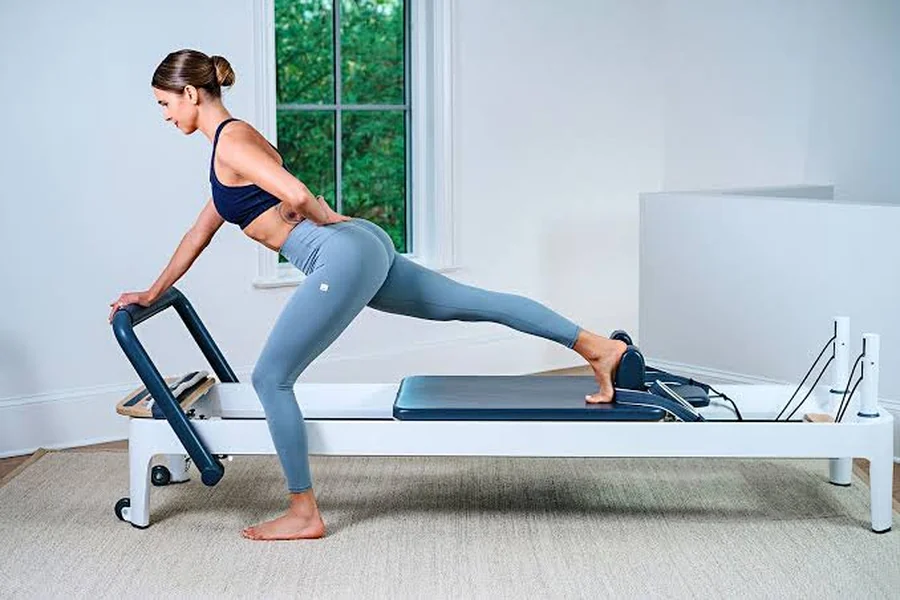
A pilates reformer can provide an effective combination of resistance training, mobility work and controlled movement from a single machine. It supports exercises for the upper body, lower body and core while allowing resistance to be adjusted according to the user’s strength and experience. Although reformers were traditionally associated with Pilates studios, an increasing number of people now use them at home. Folding models, compact machines and professional-style equipment have made reformer training accessible to users with different budgets and amounts of available space. Buying a machine requires more consideration than simply comparing prices. Carriage dimensions, frame stability, spring quality, footbar positions and adjustment systems can all influence comfort and performance. A suitable pilates reformer should accommodate the user’s body, provide predictable movement and remain practical enough to use regularly.
What Makes A Pilates Reformer Different?
A pilates reformer consists of a frame containing a padded platform that slides along horizontal rails. This platform is called the carriage. The carriage is attached to springs, cords or resistance bands. Users move it by pressing against the footbar or pulling straps connected to ropes and pulleys. Exercises can be performed in numerous positions, including:
-
Lying on the back
-
Lying on the stomach
-
Sitting on the carriage
-
Kneeling
-
Standing
-
Facing sideways
-
Supporting the hands on the footbar
-
Placing one foot on the carriage and one on the fixed platform
This variety allows one pilates reformer to support a broad range of exercise programs. The springs create resistance while the rails guide movement in a consistent direction. Users must control both the outward and returning movement of the carriage, which helps maintain tension through the muscles.
How Reformer Resistance Works
Resistance on a pilates reformer differs from the weight stacks commonly found on gym machines. Instead of selecting a numbered plate, users attach or remove springs. Each spring may provide a different level of resistance. Combining several springs increases the total tension placed on the carriage. The effect of changing resistance depends on the exercise. More spring tension may make a leg press harder because the user must push the carriage against greater force. During certain stability exercises, however, heavier springs can prevent the carriage from moving too easily. Reducing the spring tension may create a more demanding balance challenge. The user must stabilise the body while controlling a carriage that offers less assistance. For this reason, beginners should not assume that the lightest setting is always the easiest or safest option. A well-designed pilates reformer should offer enough resistance combinations to accommodate different movements, body sizes and ability levels.
Physical Benefits Of Reformer Pilates
Whole-Body Resistance Training
Reformer Pilates can train several muscle groups during the same movement. Exercises rarely involve only one isolated area of the body. A footwork exercise primarily targets the legs and glutes, but the user must also control the pelvis, maintain spinal alignment and stabilise the shoulders. Upper-body strap exercises may strengthen the arms, back and shoulders while requiring the abdominal muscles to prevent unwanted carriage movement. This integrated training style can help develop strength that is useful during everyday movement and other forms of exercise.
Core Strength And Stability
The core has an important role in almost every pilates reformer exercise. The moving carriage creates instability, requiring the torso to remain controlled while the arms or legs move. Core training on a reformer involves more than visible abdominal muscles. It can recruit deeper stabilisers around the pelvis and spine, as well as the glutes and back muscles. Exercises can be adjusted to provide more support for beginners or less stability for advanced users. Consistent practice may help users become more aware of how they position their ribs, pelvis and spine during movement.
Low-Impact Conditioning
Reformer training generally places less repetitive impact on the body than activities involving running or jumping on a hard surface. Many exercises are completed while lying, sitting or kneeling on the carriage. The springs create resistance without requiring heavy impact through the feet. A jump board can also be added to some machines. This attachment allows users to perform jumping-style exercises while lying horizontally, changing the way landing forces are experienced. Low-impact training can still be physically challenging. Slow repetitions, controlled carriage movement and sustained resistance can create considerable muscular effort.
Greater Movement Control
The carriage provides immediate feedback about movement quality. If the user applies uneven pressure, the carriage may shake, accelerate or move inconsistently. Learning to maintain a smooth carriage path encourages concentration and coordination. Users must regulate the speed rather than relying on momentum. This focus on control is one reason a pilates reformer can be useful for people seeking to improve movement quality rather than simply completing more repetitions.
Mobility And Flexibility
Reformer exercises can help users move their joints through a controlled range. The straps and carriage provide support while resistance keeps the muscles active. Common movements may target the hips, hamstrings, shoulders, ankles and spine. The machine can also be used for controlled rotation and side-bending exercises. Mobility work should remain comfortable and deliberate. A longer range is not automatically better when the user cannot maintain alignment.
Important Parts Of A Pilates Reformer
The Frame
The frame supports the rails, carriage and resistance components. It must remain stable during both basic and advanced exercises. Common materials include timber, aluminium and steel. Each material can be suitable when the machine is properly engineered. Timber reformers often have a traditional studio appearance. Aluminium can provide strength while reducing overall weight. Steel frames are frequently used in folding and compact machines. Buyers should examine the quality of the complete structure rather than selecting a pilates reformer according to frame material alone.
The Carriage
The carriage should travel smoothly and quietly along the rails. Its wheels and bearings influence the consistency of every exercise. A poor-quality carriage may feel uneven, produce excessive noise or hesitate during slow movements. These problems can make it difficult to maintain controlled technique. Carriage padding should offer support without feeling excessively soft. The surface should also be durable and easy to clean. Length and width are important for comfort. Taller or broader users should review the measurements carefully before ordering.
The Footbar
The footbar provides a surface for the hands or feet during many exercises. It may be used for leg presses, planks, lunges and upper-body support. Several adjustment positions allow the footbar to suit different exercises and body proportions. The locking system should feel secure. Users should never continue an exercise if the footbar appears loose or incorrectly positioned. Padding can improve comfort, particularly during repetitive footwork or exercises requiring pressure through the hands.
The Springs
Springs determine how much resistance the carriage provides. Traditional reformers usually include several springs with different tension levels. Colour coding can help users identify each spring strength. However, colours are not necessarily standardised between brands, so the manufacturer’s instructions should always be followed. Springs naturally experience wear over time. They should be checked regularly for stretching, corrosion, separation or unusual sounds. Replacement springs should be available for the expected lifespan of the machine.
Ropes And Straps
Ropes connect the hand and foot straps to the pulley system. Their length can affect the starting position and range of each exercise. Both sides should be adjusted evenly. Unequal rope lengths can create an unbalanced movement and make one side work harder. Comfortable straps are important because they may be held in the hands or placed around the feet for extended periods. Some reformers use loops with separate hand and foot sections, while others provide one larger loop for both purposes.
Shoulder Rests
Shoulder rests prevent the body from sliding towards the end of the carriage during pushing movements. They should be firm, padded and positioned comfortably around the shoulders. They should not force the neck into an awkward position. Removable shoulder rests can make cleaning and maintenance easier. Some machines also allow the distance between them to be adjusted.
The Headrest
An adjustable headrest can support the head and neck during exercises performed while lying down. The highest position is not appropriate for every movement. Exercises involving spinal lifting or weight through the shoulders may require the headrest to remain flat. Users should learn the recommended headrest position for each exercise before training independently.
Choosing A Pilates Reformer For A Home Gym
The best home machine is one that fits both the user and the room. Begin by measuring the available floor area. Include enough clearance to walk around the machine and extend the arms or legs beyond the frame. Consider whether the pilates reformer will remain permanently assembled or need to be stored between workouts. A permanent setup is usually more convenient because the user can begin training immediately. However, it requires a dedicated area that cannot easily be used for other purposes. Folding models can suit spare bedrooms, apartments and multipurpose rooms. Buyers should confirm how easily the machine folds and whether one person can move it safely. Transport wheels can make repositioning easier, but the machine’s total weight remains important. Australian buyers can compare different home and training machines through this range of pilates reformer equipment.
Full-Length And Compact Reformers
A full-length pilates reformer generally offers more carriage travel, greater exercise variety and a more traditional studio experience. Longer machines can be particularly useful for tall users who need extra space to extend their legs fully. Compact models are designed to reduce storage and floor-space requirements. They may use shorter frames, folding sections or simplified resistance systems. The main risk with an overly compact machine is restricted movement. A user may feel cramped or unable to adopt the correct position for certain exercises. Before selecting a smaller reformer, compare the usable carriage travel rather than looking only at the external machine dimensions.
Home Versus Studio-Grade Equipment
Domestic reformers are intended for personal or household use. They may prioritise affordability, compact storage and straightforward operation. Studio-grade machines are designed for frequent sessions involving multiple users. They usually include stronger frames, extensive adjustments and more durable surfaces. A commercial pilates reformer may also offer higher weight limits and faster rope or footbar adjustments. The warranty should match the intended environment. Commercial use may invalidate a warranty supplied only for residential exercise. Fitness facilities should also consider whether technicians, spare parts and replacement upholstery are available.
Accessories That Expand Exercise Options
A reformer box is placed on top of the carriage to support seated, side-lying and stomach-down exercises. It can make certain movements more accessible while creating new positions for upper-body and abdominal training. The box should fit the carriage securely and provide enough padding for comfortable use.
A jump board attaches near the footbar and creates a broad surface for the feet. Users can perform jumping and landing actions while lying on the carriage. Resistance from the springs controls the carriage as it travels along the rails. Jump boards are commonly used for lower-body conditioning and more dynamic reformer sessions.
A platform extension increases the fixed area at the end of the pilates reformer. Extra space can improve stability during standing exercises, lunges and transitions between positions.
A Pilates ring is a separate accessory that can be held between the hands, knees or ankles. It adds resistance and can encourage muscle engagement during selected exercises without requiring permanent machine modification.
A tower system adds vertical bars, springs and attachment points to the reformer. It substantially expands the available exercise range but also requires more space and a larger investment. A tower may be useful for experienced home users, instructors and rehabilitation settings.
Assessing Quality And Value
The lowest-priced pilates reformer is not always the most economical choice over time. A machine that feels unstable or uncomfortable may be used less frequently. Difficult adjustments can also discourage users from changing exercises or completing full sessions. Examine what is included in the advertised price. Some packages contain a box, jump board and straps, while other machines require accessories to be purchased separately. Delivery costs can be significant because reformers are large and heavy. Assembly services may also attract an additional fee. Warranty length, replacement parts and customer support should be considered alongside the initial purchase price. A reliable machine that receives regular use may offer stronger value than an inexpensive reformer that quickly needs repairs or replacement.
Safety Considerations
A pilates reformer should be assembled according to the manufacturer’s instructions and placed on a flat surface. Before each workout, inspect the main components. Springs should be connected properly, ropes should run through the pulleys and the footbar should be locked securely. Keep fingers away from the moving carriage, wheels and spring attachment points. Loose clothing, jewellery and long hair should be secured to prevent contact with the pulley system. Do not allow children to play on or around the machine without appropriate supervision. Anyone who is pregnant, recovering from surgery, managing an injury or experiencing persistent pain should seek individual professional guidance before beginning reformer training.
Developing A Home Reformer Routine
A sustainable routine does not need to involve long daily workouts. Short, structured sessions can be easier to maintain than occasional intensive exercise. Beginners may start with basic footwork, bridging, arm exercises and gentle mobility movements. The focus should remain on controlled technique rather than high repetition numbers. Stop the carriage deliberately at the end of each movement instead of allowing the springs to pull it back quickly. As strength and coordination improve, users can introduce standing exercises, lighter spring settings and more complex movement combinations. Following a qualified instructor, either in person or through an appropriate program, can help ensure exercises are performed correctly.
Is Buying A Pilates Reformer The Right Choice?
Purchasing a reformer may be worthwhile for someone who enjoys Pilates and intends to train consistently. Home ownership can reduce travel time and make it possible to exercise whenever a suitable opportunity arises. It may also lower the long-term cost for people who otherwise attend frequent studio classes. However, a machine should not be purchased solely because reformer Pilates is currently popular. The buyer must have suitable space, a realistic exercise plan and a willingness to learn correct technique. Taking studio classes before buying can help identify preferred features. Users may discover that they value a particular carriage height, spring feel, rope system or footbar design. A carefully selected pilates reformer can remain useful from beginner-level movement through to advanced strength and stability work.
Frequently Asked Questions
How does a pilates reformer work? A pilates reformer uses a sliding carriage, springs, ropes and a footbar to create adjustable resistance during controlled exercises.
Is reformer Pilates harder than mat Pilates? The difficulty depends on the exercise and resistance setting because the machine can either support a movement or make it more challenging.
Can beginners buy a reformer for home use? Beginners can train at home, but professional instruction is advisable before completing unsupervised workouts.
What muscles does a pilates reformer train? Exercises can target the legs, glutes, abdominal muscles, back, shoulders and arms while also engaging smaller stabilising muscles.
Can reformer Pilates improve posture? It may support better postural awareness by strengthening stabilising muscles and teaching controlled alignment, although individual results vary.
How much room is needed around a reformer? Users need enough space for the complete frame plus additional clearance for extended limbs, accessories and safe access.
Is a folding pilates reformer suitable for regular exercise? A good folding model can support regular training when its frame, locking system and carriage remain stable during use.
What should taller users look for? Taller users should examine the frame length, carriage travel, rope adjustment range and maximum recommended user height.
How many springs should a reformer have? The ideal number depends on the design, but the machine should provide enough resistance combinations for both supportive and challenging exercises.
Are resistance cords the same as reformer springs? Both create resistance, but cords and metal springs can feel different and may have different maintenance and replacement requirements.
Can a reformer be placed on carpet? It may be used on a firm, level carpet when the machine remains stable, although the manufacturer’s flooring recommendations should be checked.
Does a pilates reformer require maintenance? Regular inspection and cleaning are required, particularly around the rails, wheels, springs, ropes and locking mechanisms.
Can one machine accommodate several household members? Yes, provided the reformer offers suitable adjustments and weight capacity for every intended user.
Are reformer accessories necessary for beginners? Most beginners can start without many accessories, although a box may increase comfort and exercise variety.
How long does a reformer workout take? A session may last from approximately 20 minutes to an hour, depending on the program and the user’s goals.
Can a pilates reformer be used every day? Daily use may be possible when workout intensity and muscle recovery are managed appropriately, but beginners may benefit from rest days.
Is reformer Pilates effective for weight loss? It can contribute to energy expenditure and muscle development, but weight management also depends on nutrition, activity levels and overall lifestyle.
What is the best pilates reformer for home use? The best option is one that fits the user’s body, training goals, available space, budget and expected frequency of use.
